

Dental Implants in Long Island City
The closest thing to getting your natural teeth back.
The Foundation for a Confident Smile
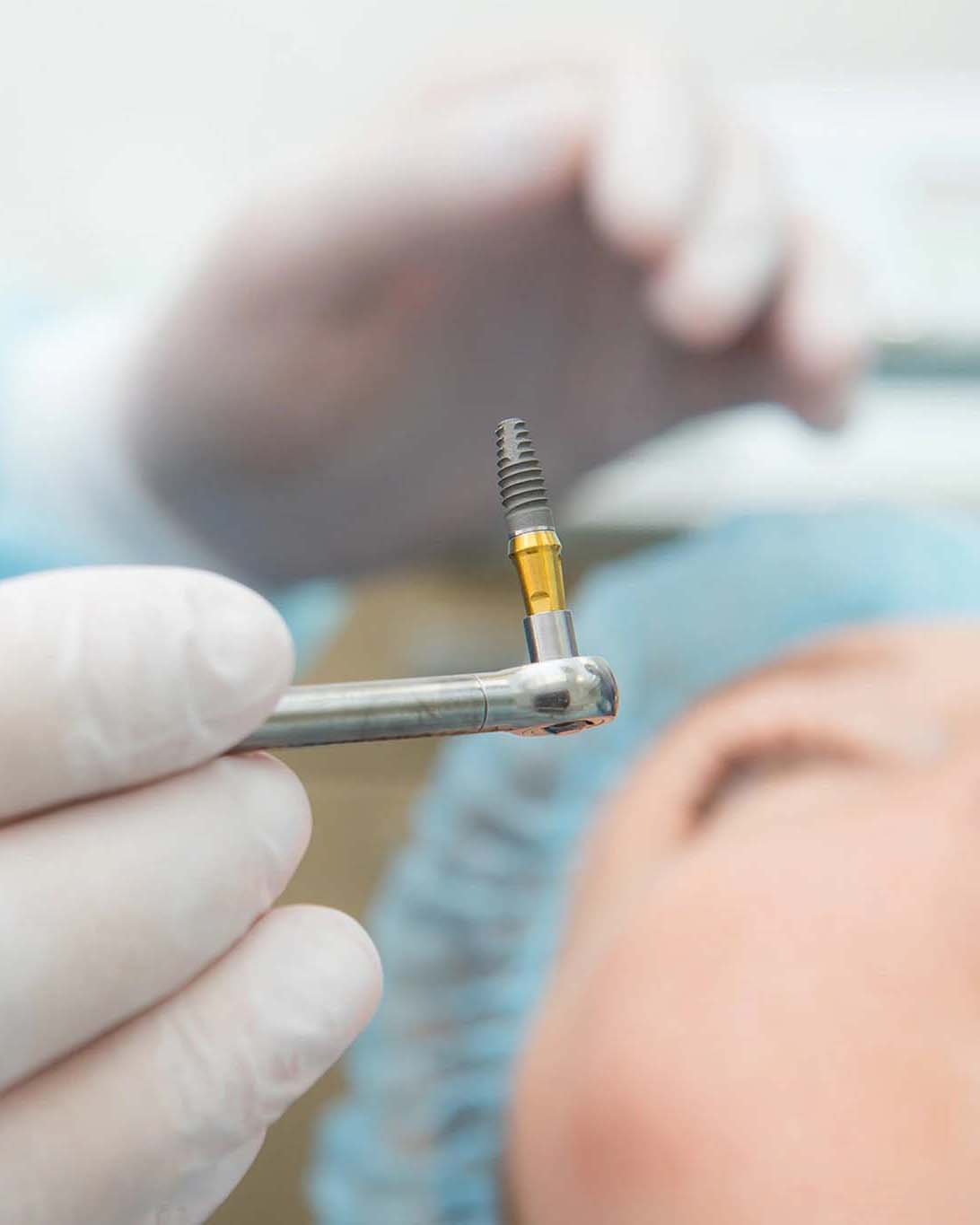
Dental implants are small, screw-like fixtures that serve as anchors to provide a stable foundation for replacement teeth such as crowns, bridges, or dentures. After being surgically placed into the jawbone, they fuse with the surrounding bone over several months in a process called osseointegration. Once restored, implants look, feel, and function like natural teeth, allowing you to eat, speak, and go about your life without thinking about them. At Gantry OMS, Dr. Miller handles the surgical component, placing each implant with precision and care; the final restoration is completed by your restorative dentist.
Types of Dental Implants
Single
This is a replacement for a single missing tooth. The implant acts as an artificial root, supporting a custom crown that matches your natural teeth in both function and appearance.
Multiple
For a span of multiple missing teeth, implants can be placed at either end of the gap to support a fixed bridge. This creates a stable, long-lasting solution that restores both aesthetics and chewing function.
Full-Arch
Depending on the plan prescribed by your dentist, multiple implants are strategically placed in the jaw to provide fixation for an overdenture, direct roundhouse bridge, or hybrid prosthetic ("AOX").
Remote Anchorage
When the upper jaw has lost too much bone volume to support conventional implants, specialized fixtures can be anchored in alternative sites such as the cheekbone or deeper jaw structures. This makes implant-supported teeth possible for patients who would otherwise not be candidates.
KLS IPS®
A custom-made titanium framework that allows for fixture placement with less reliance on bone thickness than conventional implants.
Have questions? We've got answers.
FAQs
How long does the entire dental implant process take?
The timeline for dental implants can vary depending on individual circumstances, but typically ranges from 3 to 9 months. The initial implant placement surgery usually takes 15-20 minutes per site. After this, there's a healing period of about 3 months for osseointegration (where the implant fuses with the bone). If bone grafting is used, this may add 3-6 months to the process. Once healing is complete, the final restoration is placed with your dentist, which usually takes 1-2 appointments. We provide a personalized timeline during the consultation, considering factors like overall health, bone density, and the number of implants needed.
Are dental implants painful?
Most patients report that dental implant surgery is less uncomfortable than they expected. During the procedure, the area will be numbed with local anesthesia so you won't feel any pain. Some discomfort is normal in the days following surgery, but it's typically manageable with over-the-counter pain relievers. Many patients have reported it to be less painful than a tooth extraction. We provide detailed post-operative instructions and may prescribe pain medication if needed. Most patients can return to work and normal activities within a day or two.
How long do dental implants last?
With proper care, dental implants can last a lifetime. The implant itself, which is the titanium post inserted into the jawbone, has a success rate of up to 98% and rarely needs replacement. The crown (the visible part of the tooth) typically lasts 10-15 years before it may need replacement due to normal wear and tear. However, with excellent oral hygiene and regular dental check-ups, many patients keep their original crowns for much longer. It's important to treat your implants like natural teeth - brush twice daily, floss, and visit your dentist regularly. We provide guidance on how to best care for your implants to ensure their longevity.
Who is a good candidate for dental implants?
While dental implants are a great option for many people, they're not suitable for everyone. Good candidates for implants generally have:
- Healthy gums free of periodontal disease
- Adequate bone density to support the implant
- Good overall health
- A commitment to oral hygiene and regular dental visits
Factors that might complicate implant treatment include uncontrolled diabetes, heavy smoking, or certain medications. However, even if you have one of these issues, it doesn't necessarily mean you can't get implants. We evaluate each patient individually, considering all aspects of their oral and general health. In some cases, preliminary treatments like bone grafting can make implants possible for patients who might not initially be ideal candidates.
How do I care for my dental implants?
Caring for dental implants is similar to caring for natural teeth, with a few special considerations:
- Brush twice daily with a soft-bristled toothbrush
- Floss daily, using implant-specific floss or floss threaders
- Use an antimicrobial mouthwash to reduce bacteria
- Avoid abrasive toothpastes that can scratch the implant surface
- If you have a removable implant-supported denture, clean it daily and remove it at night
- Attend regular dental check-ups and professional cleanings
- Avoid chewing on hard objects like ice or pens
- If you grind your teeth, consider using a night guard
We provide detailed care instructions tailored to your specific implant type and overall oral health needs. With proper care, your implants can provide a lifetime of comfortable, confident smiling.